By Gregory Maher
Chicago has always been a breeding ground for protest. From Haymarket Square to the 1968 Democratic National Convention Riots to the anti-Iraq war gatherings of the early aughts, and to our contemporary anti-police brutality and Trump Resistance protests. Now, the city confronts a moment in need of a cultural movement to stand against forces intent on closing up society. Chicago’s design community must confront questions of engaging and activating spaces for activism and awareness. Designers have a responsibility to use their work as tools of protest against unjust systems. If anything, their work takes greater imperative to equip citizens with truthful information, better communication networks and strategies of intervention.
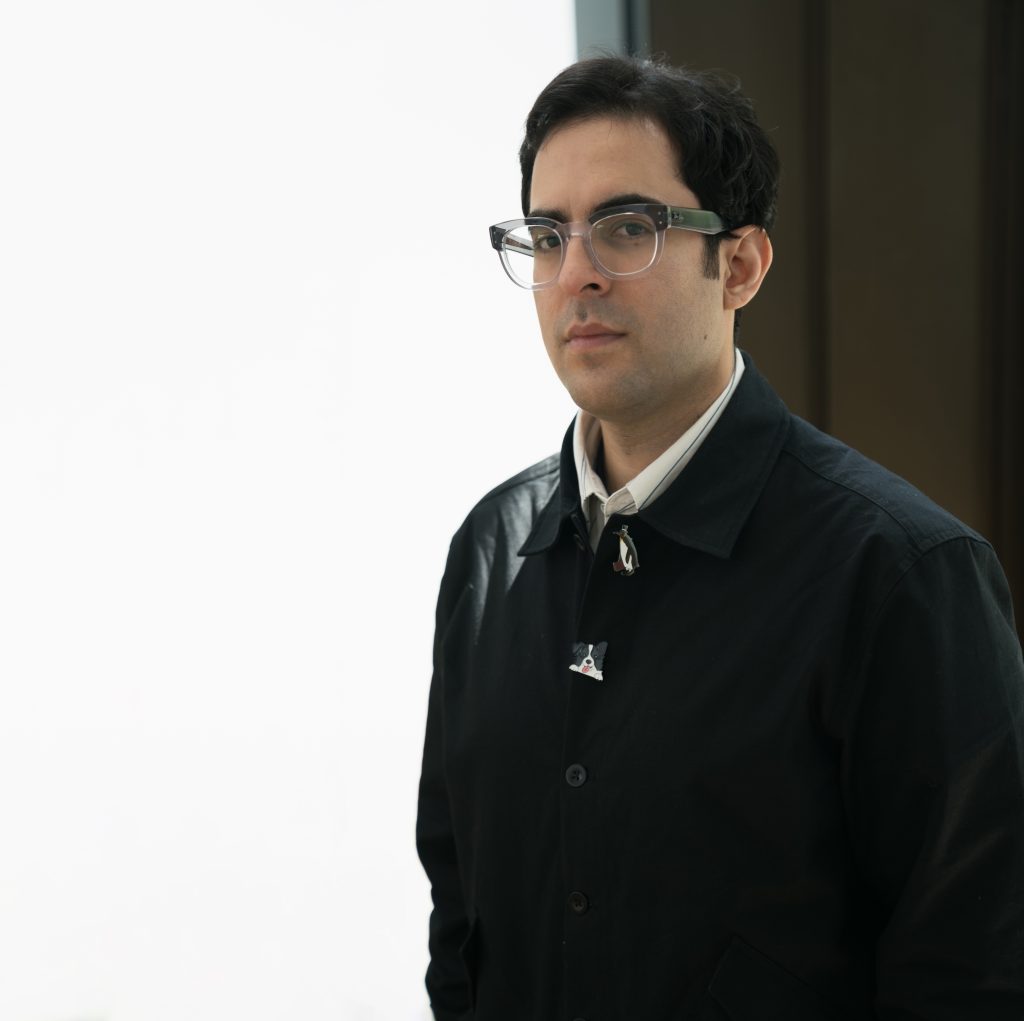
Newcity sat down with the executive director of the Chicago Design Museum, Tanner Woodford, to address the ways in which design can foment positive action and act as a force for inclusion and integrity as an alternative to the political culture that threatens to corrupt our civic body. Woodford is a designer, teacher, community organizer and curator. He describes the Chicago Design Museum as a space for “open conversation about design across disciplines and borders” which reflects Woodford’s own focus on collaboration and facilitating community. Some of his recent projects include designing stages for Chicago Ideas Week, teaching a course at School of the Art Institute of Chicago called “Design Thinking for Social Change,” launching the mono-product line Iterative Work, and reportedly colluding with Cards Against Humanity to cut a Picasso into 150,000 pieces. The following interview reflects Woodford’s personal thoughts as a designer and a citizen, and does not represent the Chicago Design Museum.
How does the design of the Trump administration reflect the influence of an aggressive central authority? What new policing methods will emerge to counter protest? What will be the impact on public spaces, government buildings and activity?
This administration’s impact is difficult to predict, as it seems to be propagating the largest disinformation campaign on its own citizens in the history of our country. Simultaneously, the president is degrading and undermining trust in a constitutionally protected, independent press.
New policing methods to counter protest are equally difficult to predict, as there is very little objective data under this administration. The protests to date have been largely and transparently peaceful, empowering and effective. Unfortunately, Chicago may be early to find out, with a “law and order” Republican threatening to “send in the feds” to curb violence, an act our mayor thinks will further “undermine our citizen’s trust in its law enforcement officials.”
When looking holistically at the design and evolution of our sovereign nation, the form and function that results from these decisions is much less frightening and alarming for me than the process by which they are obtained.
On the other hand, how do you think design will be reactive to these forces? How will these manifest in objects and strategies of protest?
We’re battling two effective communications strategies: a wildly unbalanced signal-to-noise ratio from official and independent sources, and the near constant confirmation bias we receive from meticulously curated social networks. We need to find ways to rise above the noise, while empathetically and objectively understanding the perspectives of people with opinions that differ from ours.
Aside from manifesting design in protest strategies, we need to better integrate design thinking into our political landscape, and focus on electing officials with higher moral and ethical standards. We need designers to volunteer for campaigns in the midterm elections, to be active in their social circles, and to go vote. The best form of protest is to get involved.

What are some specific examples of urban spaces that you see facilitating protest? What are the unique elements of these spaces?
Open spaces like Daley Plaza or Millennium Park allow for large groups of peaceful protesters to gather in areas that law enforcement know how to control. Though unusually large in this case, community-led protests are not uncommon. I often see organized masses marching across the Loop, with officers walking, biking and driving along. Chicago’s been a well-organized city since the days of Burnham.
Otherwise, public services like cafes, malls, libraries, schools, cultural centers and museums will be strengthened as neutral ground for discourse amongst our citizens. Spaces that are free and open to the public directly and indirectly support our collective processing power, and provide opportunity for creative and open expression on a number of levels.
How do you see designers’ work reflecting or responding to external cultural forces?
Every designer that is actively resisting is important to current protest movements. It’s hard to single a few out. Designers are often active participants of change, and the more you try to silence them, the louder their voices get. This administration, which is actively trying to silence us, will hear us loud and clear.